Travel FAQs
September 11, 2026
3 min read
Cash, Cards and ATMs in India: What Actually Works for Tourists
Cards are widely accepted in hotels and larger shops, but India still runs on cash for autos, tips, small vendors and monument counters. Here is how to handle money on a Golden Triangle trip.
Quick answer
Can I use credit cards in India, or do I need cash?
Both. Visa and Mastercard work at hotels, larger restaurants, malls and most tour operators, but you still need cash for auto-rickshaws, street vendors, tips and the cash-only counters at monument gates. Withdraw rupees from a bank ATM after you land — the rupee is a closed currency, so you cannot buy it at home, and airport exchange rates are poor.
Key takeaways
- The Indian rupee (INR) is a closed currency: get it in India, not before you fly.
- Bank ATMs (SBI, HDFC, ICICI, Axis) are everywhere in all three cities; per-withdrawal limits of ₹10,000–20,000 are common.
- Cards work at hotels, good restaurants, malls and for tour payments; carry cash for everything small.
- Break big notes early — ₹500 is the largest note in everyday use and small vendors rarely have change.
- Tell your bank you are travelling so cards are not blocked on first use.
Money is the practical question that quietly shapes a trip: how much cash to carry, whether the card will work, where to get rupees. Here is what our guests find works, city by city, on the Golden Triangle.
The currency
India uses the Indian rupee (INR, ₹). It is a closed currency, which means you generally cannot buy it from a bank at home and should not carry large amounts in or out. Plan to get your cash in India.
Notes in everyday use run from ₹10 to ₹500. The ₹2,000 note was withdrawn from circulation in 2023, so ₹500 is now the largest you will handle regularly — and even that can be hard to break at a tea stall. Keep a stock of ₹100s and ₹50s.
Where cards work
- Hotels — every 3-star and above, including deposits
- Larger restaurants and cafés — most in Delhi, Agra and Jaipur
- Malls, branded shops and government emporiums
- Tour operators — we take card payments for tour balances
- Online monument tickets — the official ASI portal accepts international cards
Visa and Mastercard are the safest bets; American Express is accepted at upmarket hotels but patchy elsewhere. Contactless is common in cities. Always choose to pay in rupees if the terminal offers your home currency; dynamic currency conversion adds 3–5%.
Where you need cash
- Auto-rickshaws, cycle rickshaws and small taxis
- Street food, chai, small shops and bazaars
- Tips for guides, drivers and hotel staff
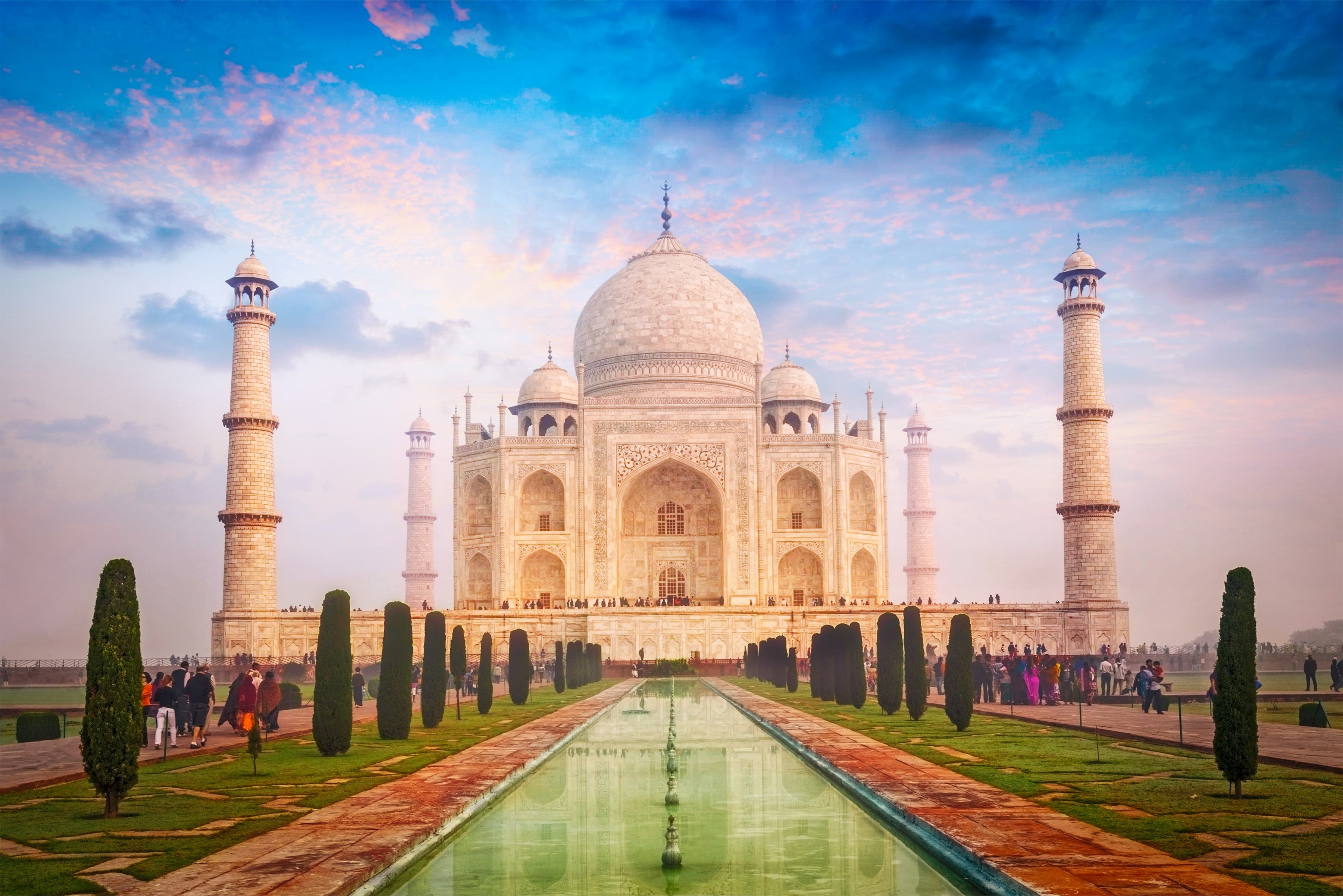
- Monument gate counters — the ticket windows at the Taj Mahal and most ASI sites are cash only (or buy online in advance)
- Cloakrooms, shoe covers, toilets, small entrance fees
As a rule of thumb, most guests on a private tour with meals and tickets arranged are comfortable with ₹3,000–5,000 per person per day in cash for the small stuff, more if they plan to shop in the bazaars.
ATMs
Bank ATMs are on every main street in all three cities. State Bank of India (SBI), HDFC, ICICI and Axis are the most reliable for foreign cards, and airport ATMs are fine for a first withdrawal. Expect:
- A per-transaction limit, commonly ₹10,000–20,000 depending on the bank
- A fee of roughly ₹200 per withdrawal from the Indian bank, plus whatever your own bank charges
- Occasional "out of cash" machines — try the next one rather than the same one twice
Use ATMs inside bank branches or hotel lobbies where possible, cover the keypad, and take the receipt.
Exchanging cash
Airport exchange counters are convenient and expensive. If you arrive with US dollars, euros or pounds, change a small amount for the first day and use ATMs afterwards, or use an authorised money changer in the city (your guide can point you to one). Keep the receipt; you will need it to change leftover rupees back on departure.
UPI and mobile payments
India runs on UPI — the QR-code payment system you will see at every stall. It normally requires an Indian bank account, so most short-stay tourists cannot use it; a limited scheme for foreign visitors exists but is not yet universal. Do not count on it. Cash and cards cover everything you need.
Before you fly
- 1Tell your bank and card issuer your travel dates.
- 2Carry two cards from different networks, kept in separate places.
- 3Know your PIN — chip-and-PIN is standard at Indian terminals.
- 4Bring some small-denomination home currency as a backup for exchange.
For what to do with all that cash once you have it, see our guide to tipping in India.
GT
About Guide India Tours
Private Golden Triangle tours run from Agra since 2004 by government-approved guides. Rated 4.9/5 by 400+ travelers on Google. Every article is written from what we see on the ground with guests every week.
Put it into practice